
Everest Base Camp

Everest Base Camp Trek
The classic Everest Base Camp Trek follows the legendary trail through the Khumbu Valley to the foot of the world’s highest mountain. Along the way, trekkers pass Sherpa villages, Buddhist monasteries, suspension bridges and some of the most recognizable Himalayan scenery in Nepal.
The Route

The trek begins with the journey into the Everest region and follows the Dudh Koshi Valley through Phakding and Namche Bazaar. Namche is the main trading center of the Khumbu and an important acclimatization stop before the trail continues higher.
From Namche, the route continues through Tengboche, home to one of the best-known monasteries in the region, and then climbs toward Pheriche and Lobuche as the landscape becomes increasingly alpine.
The upper trail follows the Khumbu Glacier toward Gorak Shep and Everest Base Camp. From Base Camp, trekkers return to Gorak Shep before making the early ascent of Kala Patthar, one of the best viewpoints for seeing Mount Everest itself.
The return journey descends through Dingboche, Namche Bazaar and the Dudh Koshi Valley before finishing back at Lukla.
What Makes This Trek Special
Everest Base Camp
Reach the famous base camp beneath Mount Everest and stand beside the Khumbu Glacier and dramatic Khumbu Icefall.
Kala Patthar
The climb to Kala Patthar provides one of the classic close-range viewpoints of Everest and the surrounding Khumbu peaks.
Khumbu Valley
The route passes through Sherpa villages, Buddhist monasteries and high mountain landscapes that define the Everest region.
Day-to-Day Itinerary
Day 1: Arrival in Kathmandu
Arrive in Kathmandu and settle into your accommodation. The day can be used to organize equipment and prepare for the journey into the Everest region.
Day 2: Flight to Lukla – Trek to Phakding (8,713 ft / 2,656 m)
The trek begins with the flight toward Lukla. From Lukla, the trail descends gradually into the Dudh Koshi Valley and continues toward Phakding.
Day 3: Trek to Namche Bazaar (11,318 ft / 3,450 m)
The route enters Sagarmatha National Park near Monjo and repeatedly crosses the Dudh Koshi on suspension bridges before beginning the steep climb toward Namche Bazaar.
Day 4: Namche Bazaar – Acclimatization Day (11,318 ft / 3,450 m)
A full day is spent around Namche Bazaar to allow additional time for acclimatization before continuing higher. Short hikes above the village can provide useful altitude exposure while returning to Namche to sleep.
Day 5: Trek to Tengboche Monastery (12,687 ft / 3,867 m)
The trail continues through the Khumbu with views toward Everest, Lhotse, Nuptse and Ama Dablam. After descending toward Phunki Tenga, the route climbs steeply toward Tengboche and its well-known monastery.
Day 6: Trek to Pheriche (13,950 ft / 4,252 m)
The trail descends through forest, crosses the Imja Khola and climbs gradually into higher alpine terrain. Ama Dablam dominates much of the surrounding landscape.
Day 7: Pheriche – Acclimatization Day (13,950 ft / 4,252 m)
A second acclimatization day provides additional time for the body to adjust before continuing toward Lobuche. Short hikes around the valley can provide additional altitude exposure.
Day 8: Trek to Lobuche (16,174 ft / 4,930 m)
The trail follows the broad valley before climbing toward the terminal moraine of the Khumbu Glacier. The route passes memorials dedicated to climbers and Sherpas who have lost their lives in the Everest region before reaching Lobuche.
Day 9: Gorak Shep – Everest Base Camp (approx. 17,600 ft / 5,364 m)
The trail continues alongside the Khumbu Glacier toward Gorak Shep before crossing glacial terrain to Everest Base Camp. The route offers close views of the glacier and the Khumbu Icefall before returning to Gorak Shep.
Day 10: Kala Patthar (18,221 ft / 5,554 m) – Trek to Dingboche
An early climb leads to Kala Patthar, one of the best-known viewpoints in the Everest region. From the summit area, trekkers can look toward Everest and across the Khumbu Glacier before descending toward Dingboche.
Day 11: Trek to Namche Bazaar (11,318 ft / 3,450 m)
The route descends through the Khumbu Valley and passes through the Tengboche area before continuing back toward Namche Bazaar.
Day 12: Trek to Lukla (9,186 ft / 2,800 m)
The final trekking day follows the Dudh Koshi Valley from Namche Bazaar back toward Lukla.
Day 13: Fly to Kathmandu
Weather permitting, fly back toward Kathmandu and spend the remainder of the day in the city.
Day 14: Depart Kathmandu
Depart Kathmandu or continue with additional travel in Nepal.
How Difficult Is This Trek?
Everest Base Camp is a challenging high-altitude trek. The route does not normally require technical climbing skills, but it involves repeated long walking days, steep ascents and descents, cold conditions and significant elevation gain.
The greatest challenge for many trekkers is not the terrain itself but the sustained altitude. Good cardiovascular fitness, leg strength and experience with long hiking days are useful preparation.

Altitude & Acclimatization
The Everest Base Camp itinerary reaches elevations above 5,000 m at Base Camp and Kala Patthar. The reduced oxygen available at these elevations makes acclimatization an essential part of the trek.
The acclimatization days in Namche Bazaar and Pheriche provide additional time for the body to adapt before the route reaches its highest points.
Best Time to Trek
The main trekking seasons for Everest Base Camp are generally March through May and September through November.
Spring generally brings warmer temperatures, while autumn is known for comparatively dry conditions and good mountain visibility. Winter trekking is possible but brings much colder temperatures at higher elevations.
Learn more about Nepal’s trekking seasons →
Related Treks
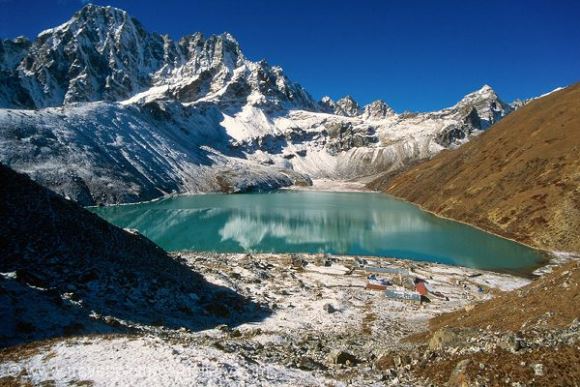
Everest Base Camp via Gokyo Lakes
A longer route through the Gokyo Valley, Gokyo Ri and Cho La Pass before reaching Everest Base Camp.
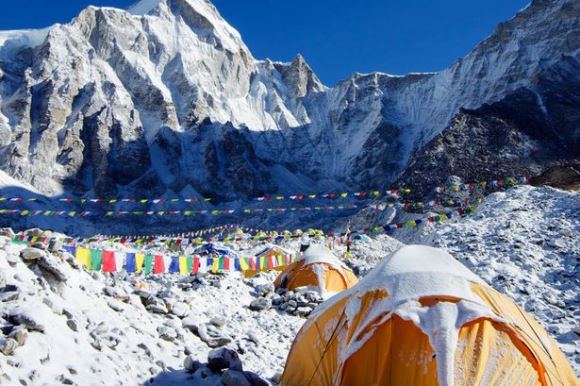
Everest Base Camp + Island Peak
Combine the Everest Base Camp journey with a Himalayan climbing objective.
.jpg)
Compare All Treks
Explore Everest, Annapurna, Langtang and Manaslu trekking routes.